
HealthAI During WHA79: What We Heard, What We Launched, What Comes Next
The 79th World Health Assembly brought the global health community to Geneva for a week of high-stakes conversations on pandemic preparedness, health financing, and increasingly, on the role of artificial intelligence in transforming health systems. For HealthAI, it was a week of meaningful engagement, honest dialogue, and renewed conviction that responsible AI in health is not a distant ambition.
Ministerial Breakfast on Responsible AI in Health
On the sidelines of WHA79, HealthAI joined the Permanent Mission of Portugal in Geneva to host a Ministerial Breakfast on Responsible AI for Health Systems Transformation: Equity, Trust and Impact at the Palais des Nations. The room brought together health ministers and senior officials from Nepal, Singapore, Fiji, Zambia, Bangladesh, India, Angola, Finland, Brazil, and Portugal, alongside representatives from WHO and the Africa CDC. HealthAI’s Ricardo Baptista Leite joined Alain Labrique from WHO and Vasilis Koulolias, Special Advisor to the Director-General on Digital Health, AI and Innovation at the Africa CDC, to anchor the discussion. The conversation framed equity at the centre, trust as the foundation, and impact as the only meaningful measure of success for AI for health systems transformation. What emerged from this conversation was an honest account of where countries stand. Ministers spoke about the gap between AI’s promise and their systems’ readiness to absorb it, raising questions about data infrastructure, workforce capacity, and who ultimately governs these tools in the public interest.

Geneva Digital Health Day: Infrastructure, Capacity, Governance
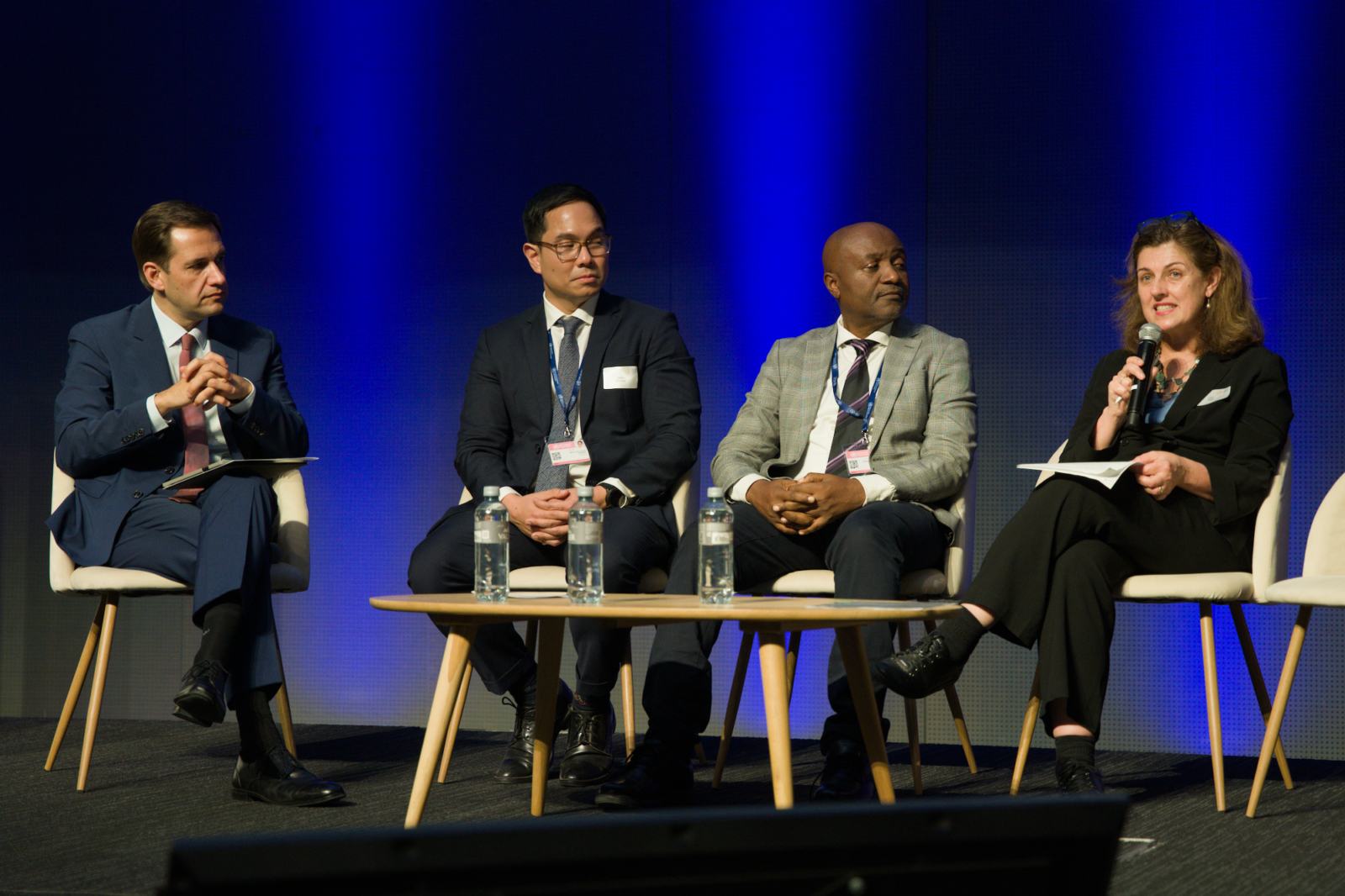
Ricardo also moderated a panel at Geneva Digital Health Day, hosted by the Geneva Digital Health Hub, featuring Albert Domingo from the Philippines’ Department of Health, Innocent Chiboma from Zambia’s Ministry of Health, and Kerri Elgar from the OECD. This panel provided the opportunity to speak with practitioners in the field. The message from them was clear: AI in health cannot succeed without the right infrastructure, meaningful human capacity, rational governance frameworks, and smart regulation. All of these elements must work together to create the foundations for responsible AI in health.
As Europe’s AI Act Compliance Deadlines Approach, HealthAI Launched a Critical Implementation Analysis
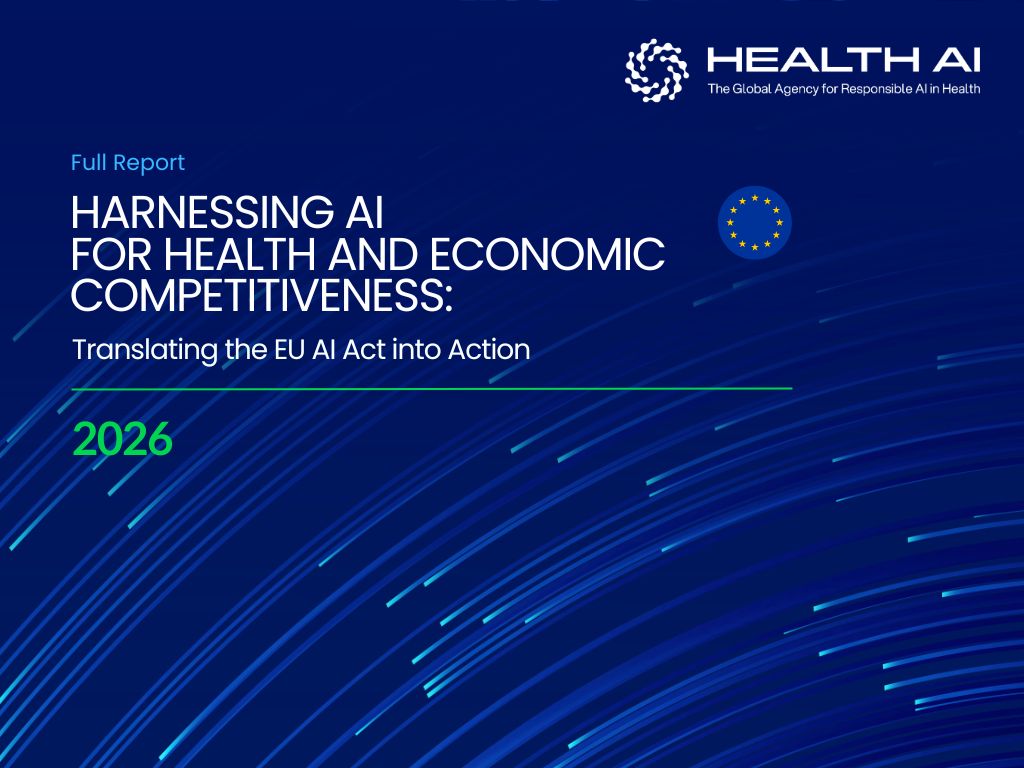
WHA79 was also the moment HealthAI chose to launch its newest report: “Harnessing AI for Health and Economic Competitiveness: Translating the EU AI Act into Action” at the World Economic Forum’s Annual Health Roundtable, in collaboration with WEF, Roche, Philips, Friends of Europe, UNITE Parliamentarians Network for Global Health, and European Health Forum Gastein. Launching it at WHA felt right because the challenges Europe faces in translating AI regulation into practice are not so different from those faced by ministers in discussions across Geneva. The details differ, but the core question is the same: how do we build systems worthy of the technology we’re deploying?
Drawing on 20 stakeholder consultations across France, Germany, Italy, and Spain, the report identifies a critical implementation gap: the infrastructure needed to support compliance is arriving later than the 2026 deadlines. Notified body capacity, diverging national models, and untested coordination between regulatory authorities all present real risks, but also real opportunities for those who move decisively. The report’s five strategic recommendations offer a path to turn regulatory requirements into a competitive advantage.
The Limits of Technological Optimism
Ricardo also joined a Devex event on the sidelines of WHA79, supported by Sanofi, focused on delivering the roadmap for chronic respiratory diseases. While optimism about AI’s potential is warranted, he warned against what he called the “AI Savior Complex”: a blinded belief that deploying AI alone will solve deep-rooted challenges in health systems. Technology layered on top of unresolved societal and managerial problems does not fix those problems; it inherits them. As Ricardo put it plainly: “If you don’t know where you’re going, AI won’t save you.”
What HealthAI Takes Away
The countries that will benefit most from AI in health are not necessarily those with the most advanced technology. They are those that invest in governance, regulation, and the human systems needed to deploy it responsibly. Across the Ministerial Breakfast, the Geneva Digital Health Day panel, and the conversations in between, a common thread ran through every exchange: the technical capability to deploy AI in health is advancing faster than the institutional capacity to govern it. That gap is not inevitable, but closing it requires deliberate, coordinated action from policymakers, regulators, and the international community.
For HealthAI, the week reinforced our belief that country-level engagement is irreplaceable. Global frameworks matter, but they only create change when they are translated into national strategies grounded in each country’s own reality, values, and constraints. That is the work and WHA79 reminded us why it matters, and why it cannot wait.
Reach Out to Us
We're here to help improve and we want to hear from you.
Got a question or an idea? Want to work with us? Fill out this form, and we'll get back to you quickly.